

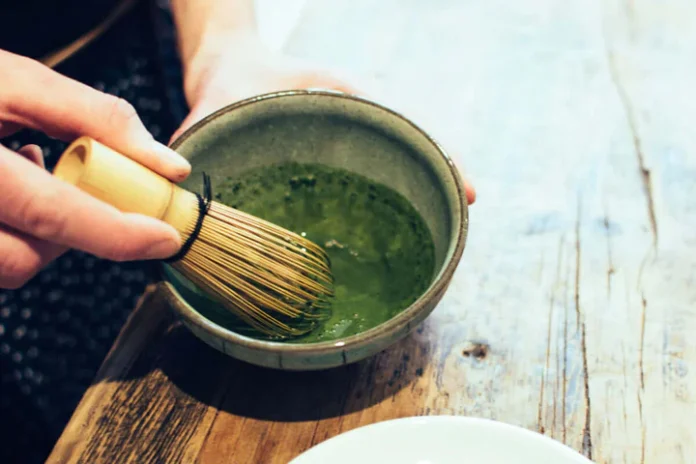
Saturday, Oct. 25, from 5 to 6:30 p.m., the College of William and Mary’s Japanese American Student Association held an educational presentation and matcha tasting in the Sadler Center. The event, titled “Culture in a Cup: The Miseducation of Matcha,” was a collaboration with on-campus cafe Town Center Cold Pressed. JASA members gave a presentation on the origin and cultural significance of matcha and a live demonstration of a matcha tea ceremony. After the presentations, the organizers served two types of matcha for tasting.
JASA president Ourania Michael ’26 spoke about the philosophy of the tea ceremony and what it meant to its original creator, Sen no Rikyū, during the presentation.
“This philosophy focuses on finding beauty in the imperfect things or the incomplete things, and it’s a symbol that everything in life is temporary and it will eventually perish,” Michael said. “So the idea is that the tea ceremony just serves as a slight pause in your day to just sit back and relax and enjoy the matcha, and it delights your body and your mind.”
In addition to the history and significance of matcha and the tea ceremony, the presenters highlighted misconceptions about matcha.
“Matcha originates from China, not Japan. And although it’s popularized in Japan, it’s important to recognize where the tradition of matcha started from, which I think isn’t really represented nearly as much,” Michael said.
JASA social chair Sara Wilson ’28 further emphasized the importance of correcting this misconception.
“We just want everyone to give credit where credit is due when they enjoy the westernized or Americanized matcha,” Wilson said.
Michael further explored the westernization of matcha.
“There’s just a lot of misrepresentation, especially on social media, specifically matcha lattes. Although matcha lattes are really good and they’ll be served today, calling matcha lattes as matcha itself is misrepresentation,” Michael said. “In Japan, a majority of people drink matcha in a traditional way with just water and no added sweeteners.”
The event’s tea ceremony demonstration included aspects of Japanese culture, contributing to JASA’s goal of ensuring the Japanese roots of matcha are understood and appreciated. Presenters explained each step of the traditional tea ceremony.
“First, the guests will take off their shoes before being ushered into the waiting room of the tea house. And then they’re greeted with a silent bow from the house and have to ritually purify themselves before entrance into the Tatami mat room, so that would entail rinsing their hands and their mouths with some water at a stone basin,” Wilson said.
Along with describing the traditional ceremony, organizers traditionally prepared the matcha served during the event, using tea ceremony equipment and hot water. Attendees tasted two types, Wakaki and Ikuyo, to compare the lighter and bitter strains of matcha. At the end of the event, Cold Pressed served its matcha lattes and pastries.
Before tasting, JASA members explained the distinction between the two matchas so attendees could accurately compare them.
“Wakaki translates to ‘young,’ and it’s characterized by a hint of sweetness. It’s more refreshing, and it’s lighter. It’s prepared at Usucha, which translates to ‘light tea.’ So, it’s good if you like a short aftertaste and a softer fragrance,” Michael said. “And then the second one is Ikuyo, which means ‘generations,’ and it’s more balanced of sweetness and umami. However, it’s a little bit more bitter than the other matchas, and it has a way stronger aroma.”
Attendees found the matcha tasting very useful to get a sense of traditional matcha and tea ceremonies.
“I’ve never tasted the distinction between them before, and I never knew that there was a distinction. So learning about that and getting to really engage with that was really interesting,” attendee Catherine Jones-Painter ’29 said.
With matcha’s rising popularity on social media, learning about the origins was important to attendees as well.
“I’m a big matcha lover; however, I understand that there’s a lot of history behind it, and as a white person enjoying matcha, I feel like I should probably be educated about the stuff and the history behind it,” Jones-Painter said.
The organizers shared this sentiment, as the importance of understanding the history of matcha was considered a key takeaway.
“It’s totally okay to prefer or like a matcha latte that’s got all those additives in it as long as you know the roots of it,” Wilson said.
JASA presenters emphasized matcha’s cultural significance, which is necessary for acknowledging matcha’s history as well.
“Matcha is known for its simplicity and its purity, and it’s not only deeply embedded within Japanese history, but also its significance comes with the creation of the tea ceremony,” Michael said.
The event’s collaboration with Cold Pressed made it unique, as attendees paid for their tickets with dining dollars. A representative from the cafe served specialty desserts.
“Cold Pressed was very helpful and generous in logistical support, providing supplies. We selected which powdered matcha to order, and then we bought that ourselves,” Wilson said. “But the pastries, everything else, the means of selling the tickets on GrubHub, Cold Pressed made that very convenient and easy for us, and we’re very appreciative of that.”
Turnout and attendee participation were both high for the event, making it enjoyable for both organizers and attendees.
“I am more than happy with how the turnout was. We ended up overbooking a little bit, so it was very exciting. At first we were nervous just because not a lot of people have heard of JASA because we’re a younger club. It’s only our third school year,” Wilson said.
Attendees enjoyed the educational aspect of the presentation in addition to the tasting and treats.
“I’m always one of those people who just wants to learn more about everything, so I saw this event and I was like, ‘Oh my gosh, a thing that I like and a chance to know more,’” Jones-Painter said.
