

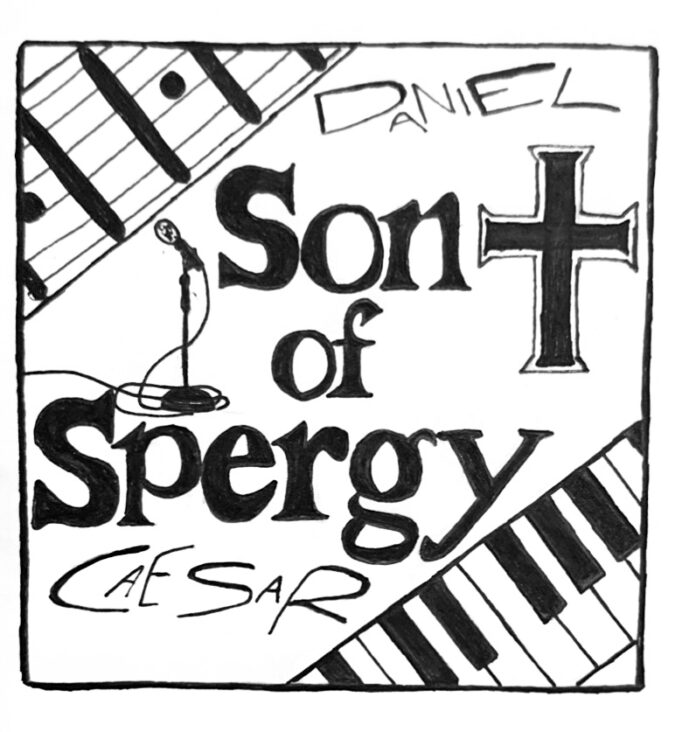
Friday, Oct. 24, Daniel Caesar released his latest album, “Son of Spergy,” which has since elicited mixed reviews. The album has a distinctly Gospel feel, intertwined with Caesar’s R&B roots. It calls upon his relationship with faith, fatherhood and self-discovery within family dynamics. Caesar engages complexly with this variety of topics, and, in doing so, he narrows his audience down immensely.
Critics, such as Pitchfork’s Stephen Kearse, argue that “the songwriting lacks the depth to develop these weighty themes.” The most common critique is that the feelings expressed from song to song, and even lyric to lyric, run counter to one another, making the whole piece feel disjointed and directionless. Kearse writes, “Whatever story he aims to tell … it’s not in the music.”
However, to discredit the chaotic harmony of Daniel Caesar’s themes is to recognize neither his goals nor his audience. Caesar presents his soul, the soul of a troubled young adult, and he sings for those who share in his uncertainty. There is true authenticity in Daniel Caesar’s confusion about his place in the world. The overarching theme of the album that I listened to was not about any single opinion he holds, but instead his inability to make sense of these views and understand himself.
When I first listened to “Son of Spergy,” I was immediately confronted with my own relationship with love. As a disconnected young adult, Caesar’s inability to pinpoint his own narrative struck gold. His second song on the album “Have A Baby (With Me)” is filled with ‘what ifs’ and ‘buts,’ a train of thought that all too many of us can relate to. “What if it cut short…What if we married, what if you believed,” felt like the perfect symbolism of the turmoil young, inexperienced and lovesick people go through. Caesar taps into the fear of it being “too late for our dreams” while also addressing the undeniable hope that is so unique to youth, that we might be able to “make a new dream.” He acknowledges the vulnerability of asking someone to give up a part of themselves to become a part of you and the juxtaposed good and bad emotions that come with this. Caesar tells us, “but you need to leave,” and we cannot help but feel the ask is just too much.
Daniel Caesar is not always actively contradicting himself from lyric to lyric. Lots of the album has a consistent idea carried across the whole song. “Baby Blue” tells of a romance he has grown to rely on. The song centered on his choice to be with someone who is “worth [his] time cause [they’re] devine,” and when he looks at them, his “melancholy dissipates.” Caesar does not spend the whole album crying out in confused anguish with himself and the world around him — he also pivots to the good type of unrest, the way joy can create butterflies of excitement. The bottom line that collects all his words together is so clearly the unsettled nature of his spectrum of emotions, be that frustration or affection or sorrow.
The later songs on the album are a testament to the theme of unrest. It is assumed that the album title is a reference to a nickname of Caesar’s father: singer and pastor Norwill Simmond. In his past music career, Caesar has referenced a difficult relationship with him, which Caesar explains manifested in a complex understanding of himself. However, “Son of Spergy” addresses this relationship differently; he sings of forgiveness through religion. Caesar’s final song on the album is titled “Sins Of The Father.” Here, he blurs the lines between God, the father and his own father. He first addresses God: “Father, you said you’d love me/like my own never could,” followed by the conflicting emotion of “this hate in [his] heart” that he holds for his own dad. Ending the album in this way makes it significantly clearer why the lyrics are in such tension with one another: Caesar is in tension with himself.
It is one thing not to connect with the themes Caesar is presenting. However, in order to truly appreciate the emotional depth of his creation, it is essential to acknowledge his intentions and then be able to concede the realization that you do not fit within the scope on which he is focused. Daniel Caesar is not writing for the people who would feel comfortable hearing his words and then dismissing them for not having enough polish. Daniel Caesar wrote to the young and broken, who he knew would make sense of what others could not. He dumped his heart out on the notes; he shared a vulnerability he was unable to perfectly make sense of himself, and the people who appreciated that got the chance to connect in a way critics cannot.
