
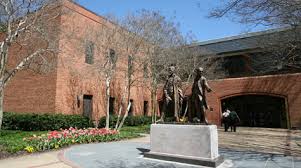
Friday, Sept. 19, the College of William and Mary Law School opened the 38th annual Supreme Court Preview. Hosted by the Law School’s Institute of Bill of Rights Law, the event is a two-day annual conference that convenes judges, scholars, advocates and journalists to discuss the Supreme Court’s upcoming term. The preview began Friday afternoon with the annual Moot Court trial and continued through Saturday evening with a series of panels.
Before the event, the Institute of Bill of Rights Law highlighted its mission statement on its website.
“One of the principal missions of the Institute is to facilitate interaction between the professions of law and journalism,” its website said. “Through a discussion of key cases on the Supreme Court’s docket at the start of each term, the annual Supreme Court Preview provides in-depth education for journalists on the underlying issues to enhance press coverage of the decisions.”
The preview opened at 4:00 p.m. in the Law School’s McGlothlin Courtroom with a welcoming statement from Alfred Wilson and Mary I.W. Lee Professor and Director of the Institute of the Bill of Rights Law Allison Orr Larsen.
“Each fall, W&M is delighted to host the Supreme Court Preview,” Larsen said. “We have with us this weekend the nation’s top Supreme Court advocates and Supreme Court journalists, along with esteemed scholars who write about the court and some of our nation’s finest jurists from the US Court of Appeals.”
The keynote event of the preview is the annual moot court trial, a mock session of an upcoming Supreme Court case. This year’s annual trial was Chiles v. Salazar, which was outlined in a preview briefing.
“In 2019, Colorado enacted a law banning licensed mental health professionals from engaging in ‘conversion therapy’ with minors, defined as efforts to change a person’s sexual orientation or gender identity,” Larsen said. “Kaley Chiles, a licensed counselor and practicing Christian, challenged the law, arguing that it prevents her from providing counseling consistent with her religious beliefs.”
Practicing attorneys Jaime Santos and Ben Snyder advocated for the upholding of the law. Larsen delivered opening introductions for each mock defense attorney.
“Ben Snyder is a partner and appellate practice co-chair at Paul Hastings,” Larsen said. “He joined that firm after a five-year stint in the Office of the Solicitor General. Ben clerked for Chief Justice Roberts and has argued before the court many times. Among his greatest hits, at least in my heart, he argued the Corner Post case for you ad law nerds.”
Larsen continued with an introduction of the second mock defense attorney.
“Jamie Santos is the co-chair of Goodwin’s Appellate and Supreme Court litigation practice, where she’s also a member of the firm’s ERISA litigation, life sciences disputes groups, and the Dobbs Task Force,” Larsen said. “She clerked for Raymond Fisher on the Ninth Circuit, and her work as an appellate litigator led her to be recognized as a DC Rising Star by the National Law Journal and Law 360.”
Ten special guest justices, professors and judicial experts acted as moot court justices. The Chief Justice was CNN’s Joan Biskupic. She served alongside Judge of the United States Court of Appeals for the Fourth Circuit Pamela Harris, Judge of the United States Court of Appeals for the Eleventh Circuit Robin Rosenbaum and Supreme Court Director at the Institute for Constitutional Advocacy and Protection Kelsi Corkran.
Several other practicing judges also participated, in addition to Wall Street Journal Supreme Court correspondent Jess Bravin, Kenneth and Harle Montgomery Professor of Public Interest Law at Stanford University Pam Karlan and Davison Douglas Professor of Law Margaret Hu.
Snyder and Santos each presented their arguments. The mock verdict ruled that the 2019 Colorado law was upheld under rational-basis review. The pending case’s official oral arguments at the Supreme Court are scheduled for October 7.
Following the mock trial, Joan Biskupic opened the first panel discussion of the weekend, discussing the implications of Trump v. Casa. The 2025 case followed the issuing of Executive Order 14160, which limited birthright citizenship for the children of immigrants. Many federal district courts issued nationwide injunctions, invalidating the executive order. The Supreme Court later ruled that federal district courts had exceeded their authority by issuing nationwide injunctions against the order.
Panelist Frederick I. and Grace Stokes Professor of Law Melissa Murray related this discourse to the recent emergency ruling that followed Noem v. Vasquez Perdomo. This emergency ruling sanctioned the use of apparent ethnicity, employment, location and language spoken as justification for detainment by the U.S. Immigration and Customs Enforcement.
“This is not the status quo,” Murray said. “This is not America. Allowing ICE patrols to go throughout Los Angeles picking up people who appear to look like they could be undocumented, that is not America.”
Additional panels continued through Saturday evening. Topics included election law, litigation over executive orders, judicial deliberation, civil rights and effects of the internet on Supreme Court rulings. The law school also held a break-out session for attendees to explore specific subject matters that interested them within administrative, immigration and criminal law.
As the event concluded, Larsen shared final comments for student attendees.
“Every year when this weekend comes, I find myself overwhelmed and a little bit in disbelief that these people come to Williamsburg every year,” Larsen said. “And so I just want to say, enjoy it. This is the good stuff.”