

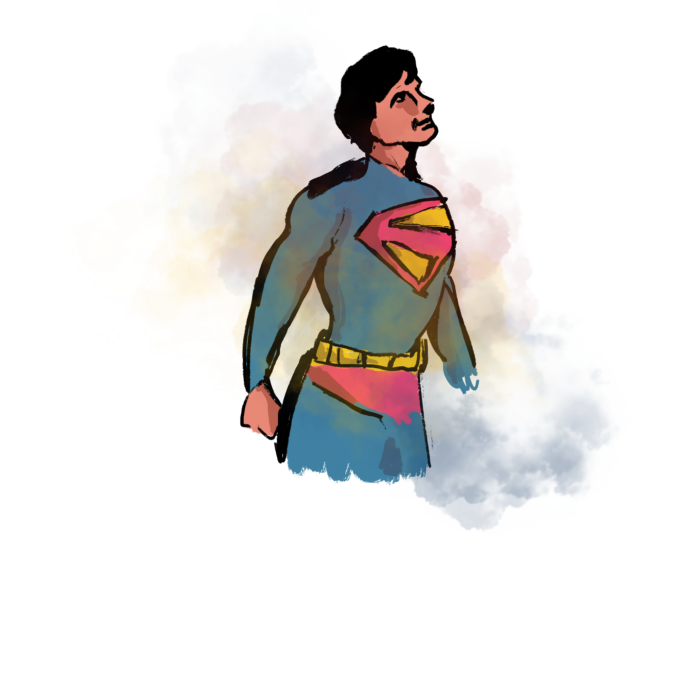
Spoilers for “Superman”: Superman saves a squirrel. That’s not necessarily the most important thing about James Gunn’s “Superman.” There’s the excellent acting, the music that knows when to energize versus solemnize and the humor (“Justice Gang” is, indeed, a dumb name). As other reviewers have noted, the movie does have a fast pace that can be a bit much, and I think that the narrative spent too much time in Lex Luthor’s prison. However, the characters make up for the messy narrative. You’ll love the goofy antics of the dingus — sorry, I mean extremely distinguished — Green Lantern, known as Guy Gardner. Lois Lane’s bravery, cynicism and desire for justice weave together into a character you’ll cheer for and wish you could meet. Lex Luthor claims to love humanity so much that he despises aliens, yet he kills and silences humans to hurt the superhero that fights for them. He is evil mixed with hypocrisy, power without accountability and ego without challenge.
Everything I’ve said so far doesn’t address the squirrel, though. Movie reviewers don’t typically start by mentioning random rodents, so why did I?
To answer that question, let me ask you one: in the middle of a fight scene with a giant lizard-like creature, with people running and screaming, with buildings as vulnerable as Jenga towers stacked all around, would you care at all about a single squirrel’s life? Would you remember that the critter even existed?
Superman did. He saved a dog, he saved people. He also protected a squirrel.
Reviews of “Superman” have praised the film’s themes about upholding justice and compassion. They proclaim that Superman’s character itself should represent these themes as boldly as possible. That’s why the squirrel matters: the scene shows the movie does not just want to preach these messages, but to explore and test its protagonist’s commitment to these ideas.
The obstacles Superman faces in his desire to be a beacon of kindness rain down on him scene after scene, persistent and heavy. He loses the approbation of Earth after it’s revealed that his parents sent him to conquer our planet. He has to babysit his cousin’s unruly and mayhem-inclined dog Krypto. He has to reckon with criticism from his girlfriend Lois Lane, and he has to decide who he should be and why.
Superman ultimately listens to Lois but upholds his values. He saves Krypto from Lex Luthor despite the dog’s past shenanigans, and he saves person after person (and animal after animal) regardless of his parents’ desires and who the public believes he is. Superman’s actions show that, for this hero, his duties and determination for a better world override all else. The obstacles Superman faces gradually reveal his character, culminating in his final challenge.
In the movie’s climax, a military conflict between two fictional nations comes to a head as the people of Jarhanpur face invasion by the military of Boravia. Boravia’s leader claims he wants to free the Jarhanpurians, while the Jarhanpurians see this invasion as a takeover by a corrupt government and are prepared to fight back. Superman sides with Jarhanpur, and his stance causes other characters to question whether or not he has the right to intervene and what the implications of his actions are. Lois herself asks Superman to respond to these concerns.
These questions are valid. They need answers. But so does the question that lies in the audience’s heart as the film progresses, as it’s realized that the United States will not intervene because of its alliance with Boravia. Later on, Lois and fellow journalist Jimmy Olsen reveal why Luthor worked to imprison Superman and Luthercorp provided weapons to Boravia. After its conquest, Jarhanpur will be split between Luthercorp and Boravia. The land is a holy grail of oil, and the people are in the way.
When human rights are on the verge of violation, when corruption and violence rise to consume more of our humanity, and when no government wants to step in even as civilians are about to be murdered — what should be done?
In the film, a little Jarhanpurian boy holds up a flag for Superman, even as his friends run and a soldier aims a gun at him. That’s the moment when the question “what should be done” must be answered.
Superman attempts to fly as quickly as he can to Jarhanpur. He believes first and foremost in protecting people who have no one to protect them. His answer to the question posed above is simple: if no one else will act, I will. Yet, when Superman is caught up fighting Luthor’s henchmen on the other side of the world, it’s ultimately Green Lantern, Hawkgirl, Mr. Terrific and Metamorpho who aid the Jarhanpurians.
I read a comment online where someone pointed out that Superman could not have succeeded without other people’s support. They highlighted that the movie’s themes, although embodied by Superman, cannot be enacted only by Superman. Superman needed his fellow heroes — and the investigative work of journalists — to stop Luthor’s plans. The implication: even if Superman existed in our world, he alone could not save those who needed to be saved.
In other words, the movie points out that good cannot be accomplished by a single pair of hands with the weight of the world placed in their palms alone. Good is done by countless hands carrying countless pieces of that weight.
I believe the movie is not encouraging you to emulate the protagonists exactly; it’s not asking you to break any laws, nor is it asking you to turn into a meta-human. It is asking you to stop ignoring the pain in your heart when you see injustice, the pain you dismiss because you think you are powerless. It’s asking you to care about the child with the flag. It’s asking you to remember that other lives matter regardless of what borders they reside within.
From what I’ve seen, movies with clear, shameless personalities are the kind that audiences fall in love with and think about over and over again. These kinds of movies are not just distinctive, but often have much to say. They provoke the audience with new ideas and old worries, inquiring into why we see the world as we do and whether we should update our vision.
“Superman” will both resonate in the future and stick with us now, thanks to its interrogation of our moral vision, of who and what we decide to care about and why. The movie will echo in our ears because of its call for a world of justice, compassion, accountability, transparency and joy.
