

Ryan Flanagan ’27 (they/them) is a mathematics major at William & Mary and former president of the now-defunct Neurodiversity Student Group. Originally from Chesapeake, VA, they’re currently hyperfixated on Pokémon Pokopia. Ryan also serves on the board of a local queer nonprofit and is committed to elevating intersex and nonbinary voices within the LGBTQIA+ community. Contact: rflanagan@wm.edu
The views expressed in the article are the author’s own.
This article contains discussions of sexual content, specifically kinks.
Conversations around inclusion at the College of William and Mary often emphasize representational diversity, but equity and inclusion are equally central to traditional DEI frameworks. As a visibly neurodivergent and non-traditional student, I have repeatedly encountered barriers to meaningful inclusion in student life at the College. Queer organizations off campus often have explicit mandates to support populations such as people living with HIV, intersex and other gender nonconforming people. However, unlike other institutions I have attended, the queer organizations on campus are often student-driven rather than university-initiated. Ideally, this allows for more student autonomy. But without admin oversight and clearly defined standards, this structure risks sidelining vulnerable communities — such as intersex people and people living with HIV — whose needs are less recognized.
To understand how this plays out in practice, it is important to look at how W&M Pride Committee is organized. W&M Pride operates as a coalition of three student organizations — oSTEM, Drag & Drop, and Lambda Alliance — working in concert with Student Assembly to organize events celebrating LGBTQ+ pride throughout the month of April. In my experience serving on the pride committee, there was often a lack of long-term thinking and a distinct lack of decorum.
One consequence of this lack of planning is the creation of barriers for disabled students. I observed instances where cross-talk and frequent interruptions made it difficult to fully express perspectives related to disability and intersex inclusion. While often unintentional, cross-talk can function as a structural barrier to participation, particularly for neurodiverse folks. This is especially striking during Autism Acceptance Month, when institutions signal support but may not always implement basic accommodations. At a minimum, campus organizations should ensure structured and uninterrupted public comment periods. Communication access is not something that should be considered a privilege; it should be universal. Robert’s Rules of Order is in practice at my local Sisters of Perpetual Indulgence chapter, a collective of drag artists engaged in community service and activism. W&M Pride could also be informed by disability activism, which has emphasized the inclusion of a wide range of disabled folks and their communication needs.
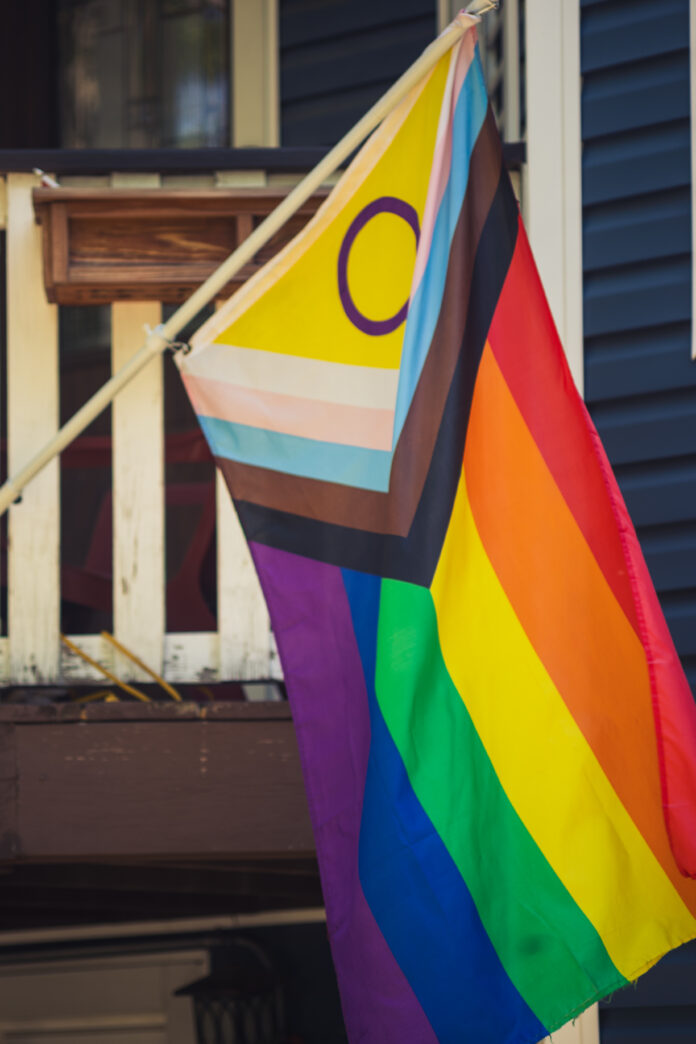
More structure, such as the recognition of speakers, would allow people under the plus umbrella — for example, intersex individuals — to suggest events that not only acknowledge but actively celebrate the full diversity of the community.
However, this pattern is not limited to face-to-face discussions. It also concerns the internal policing of queer expression within the community itself. In a recent Lambda Alliance Discord discussion, public statements by members of the group implied that wearing leather attire at a campus event constituted a violation of “consent.” These respectability politics are not unique to any single organization. Historically, the Mattachine Society, one of the first gay rights groups in the United States, centered the voices of white cisgender gay men over the voices of drag queens and transgender people who were considered less palatable by its leadership.
However, this use of consent language risks distorting its meaning, reducing it from a framework for ethical engagement to something more ambiguous. Consent has a specific meaning: it refers to agreement to participate in an interaction. It is not a tool for regulating who is allowed to exist or be visible. In an era where states are increasingly criminalizing transgender people and drag artists for their mere presence in public space, this misuse of consent language should give all of us pause.
This nebulously defined use of consent continues in formal standards articulated by affiliated groups themselves. Drag & Drop’s “Sexual & Consensual Conduct” guidance states that “upon entering the space, [the] audience is consenting to your performance,” framing consent as something automatically granted through mere presence rather than actively given in interaction. It conflates consent with expectation — what one might reasonably anticipate viewing at an event. The same document further complicates this framework by banning “kink” performances, regulated largely through attire, while simultaneously permitting strip routines with executive approval. This creates a contradiction in practice: a person fully clad in leather could be prohibited, while a more minimally clothed performer is permitted. It also ignores the history of how drag itself was prohibited under obscenity laws.
The result is not a coherent standard, but a set of rules that are selectively legible and unevenly applied. This also erases the leather community, which has been a significant fundraiser for queer and AIDS service organizations.
If W&M Pride and its affiliated organizations are serious about inclusion, they should define clearly articulated and fairly enforced written standards. These standards should not only be informed by student input but also by subject-matter experts in queer history and established best practices in accessibility.
I ask W&M Pride: whose Pride is it?
EDITOR’S NOTE (4/29/26): This opinion article references a private student organization discussion. Some individuals involved have expressed concern about its characterization. The Flat Hat welcomes responses from those with differing perspectives through response articles or op-eds.
CORRECTION (05/05/26): Article was updated by Mona Garimella, the Editor-in-Chief, to add a content warning to the article.
