

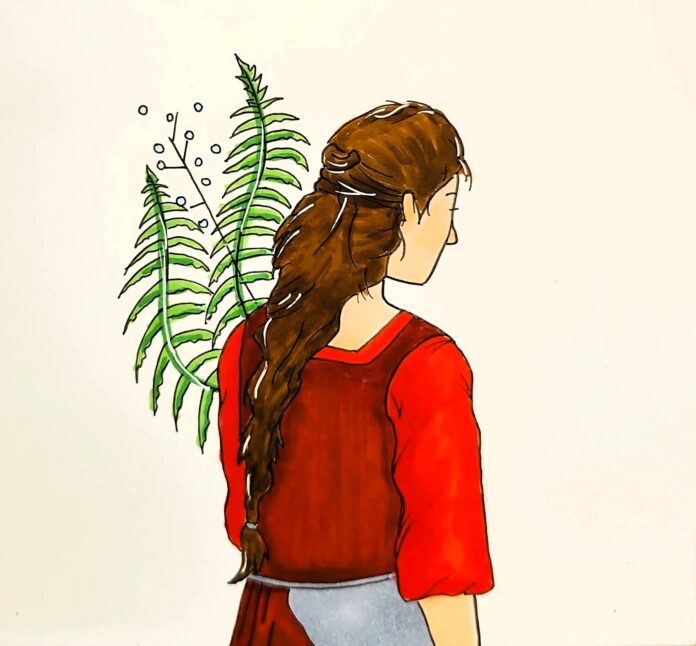
“To be, or not to be?” is the interwoven question of the 2025 film “Hamnet.” Based on Maggie O’Farrell’s 2024 novel of the same title, the film explores the connection between the death of William Shakespeare and Anne/Agnes Hathaway’s son Hamnet and the creation of one of Shakespeare’s most referenced works on grief, “Hamlet.” The film connects viewers on the basis of the shared human experience of grief.
“Hamnet” was released in August of 2025 and received eight Oscar nominations, including Best Picture, Best Production and Best Leading Actress for Irish actress Jessie Buckley’s performance as Shakespeare’s wife, Agnes. Buckley deservedly took home the Oscar Sunday, March 15. As the film’s lingering forested scenes whisper to audiences worldwide, Hamnet is a quiet, creeping success.
From the nymph-like birth of Shakespeare and Agnes’s first daughter, the screaming bouts of grief in the loss of their son to the emotionally shattering scene with a young player as Hamlet reminding both parents of their child, “Hamnet” is rife with emotionally charged moments ranging from giddy abandon to the darkest bouts of depression.
The pacing of the story, the acting and the lingering videography contribute to the sentimentality and pressure of the film. In its intentional pacing, “Hamnet” sits inside of its viewer, walks around and inquires of them what their beliefs about human emotion and human existence are. The film opens with the whirlwind romance of Shakespeare and Agnes that resulted in marriage. This beginning leads to the true genesis of the story, when the couple’s twins, Judith and Hamnet, are born. The time after the twins are born is filled with action, excitement and misery as the beginning of life flows by listlessly, with little sense of time’s worth.
With filmmaker Chloé Zhao’s subtle creative style and sweeping scenes, “Hamnet” almost states more with its subtle drags on certain scenes than in the overt script. Such is the case in the motif of the hole in the forest, which separates Agnes from another world that she has no conception of. The hole in the ground of the forest encapsulates the mystery and fear for Agnes in the idea of terrestrial life’s end.
Buckley’s performance as the moral heart of the story, Agnes, added a maternal passion and fire to the role in her expression and movement. Buckley’s cradling posture in the scenes of her Hamnet and Judith battling the Bulbonic plague display a genuine emotional outpouring and Agnes’ steady hand in her children’s pain. Noah Jupe’s performance as The Player who portrayed Hamlet was the standout performance of the final show. The gravity of the moment when he utters the famous enumerations of “Hamlet” at the Globe Theatre, his transcendent gaze while the crowd reaches out to empathize in his pain, is the most gripping scene of the entire movie.
Although it does have many strengths, the film itself typifies the stereotypical romanization of figures in the historical canon. The film is markedly a work of romanticized fantasy, rather than historical reality. Most people probably have little knowledge of the historiography behind the making of Shakespeare’s “Hamlet,” and after watching “Hamnet,” they still don’t. When and what plays Shakespeare wrote based on Hamnet’s death is a topic of extreme contention among scholars of early modern literature. Some suggest that Anne’s grief after losing Hamnet led him to write in the character of the grieving mother in “King John,” some scholars suggest that there was a pointed avoidance of writing about grief during this time and some suggest that Hamlet is directly inspired by Hamnet’s death. The idea presented by the film that Hamnet inspired “Hamlet” constructs a poignant narrative, but this narrative should be viewed with in light of historical skepticism. The vibrantly colored costuming also seconds the idea that the work should be considered as fictional. The film is a historical fantasy, not a historical reality.
As Hamlet says in Shakespeare’s play, “If thou didst ever hold me in thy heart/ Absent thee from felicity awhile/ And in this harsh world draw thy breath in pain/To tell my story.” These words are a theory as to why Shakespeare wrote: he was trying to tell the stories of pain-ridden people.
Zhao’s work revives Hamlet as a work: to live vividly through the costuming of human grime, in scenes of nature and vocal human suffering is a noble thing. The lingering forested scenes, 17th-century costuming and the chemistry of Paul Mescal as Shakespeare, Buckley and Jupe construct “Hamnet” as a timeless piece of film that deserves to be recognized as such.
To watch “Hamnet” is to question human existence. It is with sober lips and Buckley’s struggling smile that Zhao’s film kisses the viewer adieu, holding their hand through whatever they believe about the end of the mortal world.
