
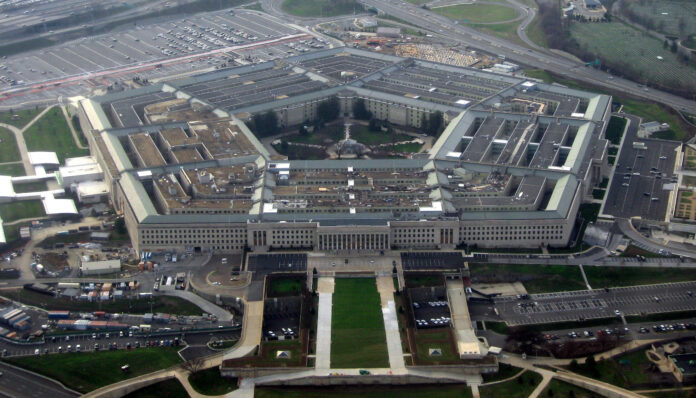
Friday, Feb. 27, the United States Pentagon announced the cancellation of its Senior Service College Fellowship program at the College of William and Mary. The SSC program employs universities to provide educational and career growth opportunities to military officers or civilian officials that help prepare them for roles in national security and defense.
This memo eliminates legacy SSC fellowships at 22 Ivy League and other institutions that do not fit the Department of Defense’s vision.
“We will no longer invest in institutions that fail to sharpen our leaders’ warfighting capabilities or that undermine the very values they are sworn to defend,” the memo states.
In a video posted by Secretary of Defense Pete Hegseth the same day, he cites these schools as “woke,” prompting the loss of national investment in their fellowships moving forward.
“For decades, the Ivy League and similar institutions have gorged themselves on a trust fund of American taxpayer dollars, only to become factories of anti-American resentment and military disdain,” Hegseth said. “They’ve taken our best and brightest, the men and women who pledged their lives to this nation, and subjected them to a curriculum of contempt.”
Col. Morris Brown is the only — and now, last — student in the fellowship this year. Brown is in the program as a U.S. Army War College Fellow, where he attends courses in the master of public policy program.
Brown holds a masters of science in logistics management from Florida Tech. Fellows do not receive another degree from the MPP program. However, he will complete the track spring 2026.
Brown learned about the cancellation through official communication and subsequent discussions within the fellowship community. He shared his reaction to the program being discontinued.
“While I was disappointed, given the value the program provides in developing strategic leaders, I’m grateful for the opportunity and the legacy of fellows before me, and I understand that we must remain aligned with senior leader guidance and evolving policy direction,” Brown wrote in an email to The Flat Hat.
Through the program, Brown had the opportunity to think critically about national security challenges, engage with diverse perspectives and refine his ability to operate at the strategic level.
Brown was first drawn to the program because it provided a rare opportunity for him to step back from operational demands and focus on becoming a more effective leader. He chose the College specifically because of its proximity to Washington, D.C. — the center of the country’s policymaking — and other army resources. His wife was also an alumna of the College.
“[The College] sits within a region that is closely connected to key Army and sustainment enterprise nodes, which directly aligns with my professional background and research interests,” he wrote. “The MPP program itself emphasizes policy analysis, governance, and leadership in a way that directly complements the Army’s expectations for strategic leaders.”
Brown identified the opportunity to interact with current and future policymakers as one of the program’s most valuable aspects.
“The community has been outstanding,” he wrote. “The program brings together military professionals and civilian scholars in a way that fosters mutual respect, intellectual curiosity, and meaningful dialogue. That kind of environment is essential for developing leaders who can operate effectively across the joint, interagency, and policy landscape.”
Brown shared how the program has strengthened his ability to think critically and creatively about national security issues.
“Through my Individual Learning Plan and research, I’ve been able to analyze how governmental, military, and private sector institutions interact to achieve strategic objectives, and how leaders make decisions in complex environments,” he wrote. “It has also sharpened my ability to communicate clearly and persuasively across military and civilian audiences — something that is essential at the strategic level.”
He commented on the gaps the program’s cancellation may leave.
“Future Army fellows may miss the opportunity to study at an institution like William & Mary — the second-oldest university in the nation — with a strong tradition of preparing leaders for public service,” Brown wrote. “At the same time, graduate students and faculty within the MPP program may also miss the presence of future fellows, whose operational experience and strategic perspective help bridge the gap between theory and practice, enriching classroom discussions and the broader academic environment.”
Despite the program’s closure, Brown appreciates the opportunity to have been a fellow.
“My experience at William & Mary has been academically rigorous, professionally meaningful, and personally rewarding, and I’m grateful for the opportunity to be part of it,” he wrote.
The College’s administration also commented on the surprising removal of the program in its “Federal Guidelines” page on its website.
“William & Mary is puzzled and saddened to be listed as part of the Department of War’s announcement canceling the Senior Service College program,” the website reads. “The culture on our campus is one of longstanding support for our military and veteran students. We hope to learn more because this action does not align with what we know to be the experience of military and veteran students on our campus.”
The College did not receive any official notice or reason from the Department of Defense regarding the removal. The College’s response also included the institution’s long history with military education and cited a continued commitment to that education despite the news.
Wednesday, March 4, Governor Abigail Spanberger D.P.S. ’26 commented on the removal of the program at the College, calling it “outrageous.”
“The idea that the Pentagon would pull back from this fellowship program that has been long a fixture at William and Mary is just outrageous,” Spanberger said. “William and Mary, apart from being just an extraordinary institution, is a place that has long educated leaders including, and notably, military leaders. Their chancellor is Robert Gates, former secretary of defense, and the fact that [the College] would be targeted in this way by the Department of Defense and by secretary [Hegesth] is just an outrage, and I think speaks to their lack of understanding of the real strength of universities, whether that’s William and Mary or others, in educating the next generation of military leadership.”
Friday, March 13, Hegseth followed up on the cancellation and announced a task force to evaluate all SSCs, again calling some civilian institutions formerly hosting the program to be “too woke.”
“After the wokeness and weakness of Joe Biden’s administration, our war fighters deserve training with integrity, where the focus is on the warrior ethos, on deterrence and on strength,” Hegseth said.