

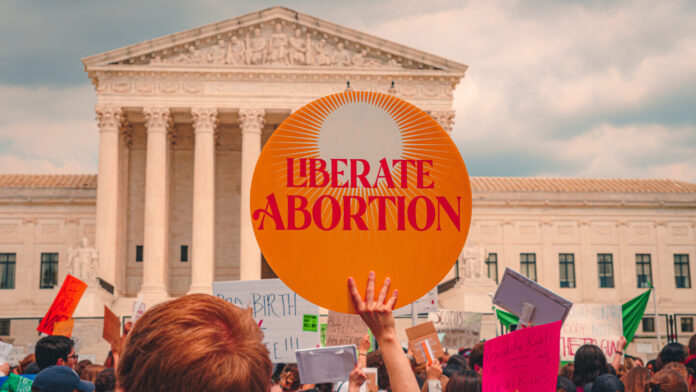
Wednesday, Oct. 28, Vox: Planned Parenthood Generation Action, a student-run reproductive justice organization at the College of William and Mary, hosted its annual pro-abortion panel at Tucker Theater. Vox invited six speakers to discuss their support for abortion and access to reproductive healthcare.
Katelyn Yen ’27, co-president of Vox, highlighted the significance of the term “pro-abortion” as opposed to “pro-choice.” This distinction set the precedent for the event’s main message.
“We say pro-abortion instead of pro-choice because we recognize that abortion is more than just the choice to have an abortion,” she said. “We care about access, whether that be economic or whether someone has to travel or has any sort of familial pressures. We believe that everyone should have access and the choice to an abortion rather than just having the option.”
The event speakers were government professor Christine Nemacheck; campaign manager of Virginians for Reproductive Freedom Han Jones; chief medical officer at the Virginia League of Planned Parenthood Shanthi Ramesh; legislative representative at the American Federation of Government Employees Fiona Kohrman; Student Assembly Vice President Sophie Kennedy ’27; and modern languages and literature professor Corinne Stokes.
Jones shared their insights into the politics shaping abortion rights within Virginia.
“We know that at no point in anyone’s pregnancy is a politician the most qualified person to be making their healthcare decisions for them,” they said. “This is about people being able to make the decisions that are best for them with their doctors.”
After receiving undergraduate and master’s degrees from Brown University, Jones began their career in policy and shifted to politics. They said they realized their policy work wouldn’t matter if the wrong people were in charge.
Jones’ career changed when Roe v. Wade was overturned in June 2022, dissolving a constitutional right to abortion among individual state powers. Right now, they said they are in support of taking action to pass the current proposed Right to Reproductive Freedom Amendment in Virginia.
“I think it’s easy to say now that we know that right now, abortion is legal in Virginia,” Jones said. “And I hear people say sometimes, well, why do we need this amendment? And it’s because I don’t think you understand how close we got to that not being the case.”
Jones cited Virginia’s close call in 2023 when former Gov. Glenn Youngkin was actively campaigning for an abortion ban similar to the one that was set in place in North Carolina.
Jones said Virginians pushed back, and these efforts led to the constitutional amendment’s passage through both the initial legislative session and intervening election in 2025. They added that a majority voting yes in the 2026 election keeps the amendment and its proposed reproductive freedoms intact in the state.
Jones encouraged the audience to vote on the amendment.
“There are three constitutional amendment questions on the ballot this year, and they’re all related to your freedom and creating generational protections for your freedom,” they said. “This could be one of the most important elections in Virginia, not just while they’re in college, not just the next few years, potentially ever.”
Ramesh, who is an OB-GYN and has lived in Virginia for the past 10 years, said that abortion is part of the care she provides.
Ramesh recognized the stigma surrounding abortions. She said that her patients often feel isolated.
“I think there’s just a ton of stigma and shame around what is a very common and very normal experience,” Ramesh said.
Ramesh added that this fear can be mitigated with reassurance and a listening ear.
“There isn’t one story, one reason, one type of patient,” she said. “It [abortion] is just this extremely expansive experience, and people of all sorts of backgrounds are in need of this type of care.”
Ramesh said she sees the only intended effect of legal restrictions as limiting a patient’s access to abortion.
She emphasized additional financial, age-related or language barriers.
“Medicine is already extensively regulated, and so the goal of those [politically motivated legal restrictions] is really to limit a patient’s access to abortion,” she said.
Stokes, who experienced complications in her pregnancy and sought an abortion, said she experienced similar obstacles firsthand.
When Stokes decided to terminate the pregnancy, she learned that insurance wouldn’t cover the procedure.
“I didn’t expect to confront the institutions that I always hope will protect me, depriving me of a feeling of affirmation or acknowledgement or protection in a very vulnerable time, when I felt very disconnected from myself and my body and my dreams and everything,” Stokes said.
Stokes added that the idea of a late-term abortion was stigmatized during her childhood. She described it as a form of medical care for women in vulnerable situations.
“It’s not as uncommon as you think,” she said. “Sometimes, there’s a very fine line between a pregnancy that is working out, it’s not working out. It’s healthy, it’s not healthy. It’s wanted, it’s not wanted.”
