

Emma Riley ’30 is a prospective English major from Westminster, Maryland. She is a part of the club fencing team and enjoys spending time with her friends, reading, watching rom-coms and writing. You can contact her at ekriley@wm.edu.
The views expressed in the article are the author’s own.
The beginning of freshman year is a weird experience. You come in knowing, on average, nobody and get thrown into a brand new environment. One of these people you probably don’t know is your roommate, the person that you are now in closer proximity to than most of the people you’ve ever met. Once the Orientation fever dream wears off, you can decide whether or not to stay close with everyone else you met that week, but not your roommate. The two of you are stuck together for the entire year.
You most likely met on Instagram, sent a few messages back and forth, and decided, Why not? You both seemed nice enough, and how bad could it possibly be? And maybe you became really good friends and are perfectly happy.
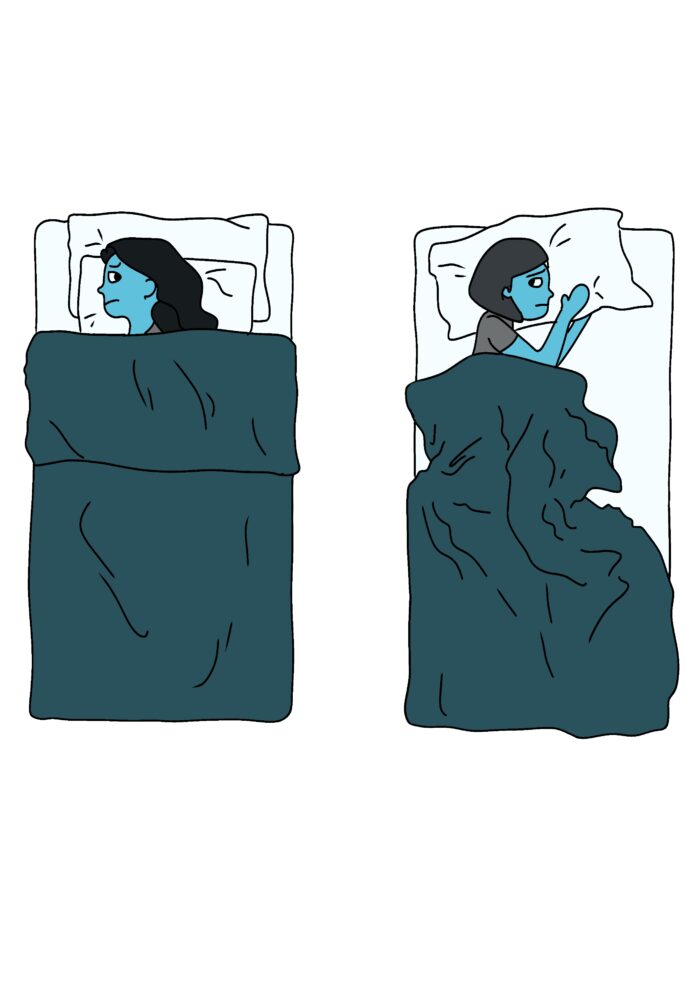
Or maybe it was fine for a few weeks, and then you started to realize that they take up all the fridge space, or they leave dirty dishes sitting around the room. Or, the two of you just don’t pair well, and you don’t realize until two weeks in that you’re a night owl and they wake up at 6 a.m. sharp every day. The blame isn’t on either one of you, but you both have to deal with the consequences. All of those minor inconveniences and frustrations start to pile up, and you remember that you have to deal with this until May.
This would all be easier if the default for freshmen was to change rooms after the end of the fall semester. Right now, the Residence Life policies permit room changes on an individual basis. You can either submit for a general room change, which “are typically approved as vacancies become available on a first-come, first-served basis,” or a person-for-person swap.
If you submit for a general room change, there’s no guarantee you can actually move out, but in order to initiate the room change process, ResLife strongly advises that you discuss the matter with your roommate. If you aren’t able to change rooms, there is now awkward tension that you have to deal with on top of all of your other issues.
However, trying to get a person-for-person swap has a lot more moving parts. You have to find someone that you want to room with, whose roommate would also be willing to change rooms. Then you have to get your roommate on board with having a different roommate and make sure they don’t mind rooming with the person willing to switch with you. And if you’re in a living learning community, a person-for-person swap isn’t an option.
Many would argue that it simply comes down to communication. However, a conversation can’t fix mismatched sleep schedules or cleanliness standards. Good communication is an important skill to build, but it can’t solve a lack of compatibility.
Instead of these limited options, all freshmen should automatically have the option to change rooms at the beginning of the spring semester. This way, people who want to keep their roommates can, but people who want to switch can do so without the awkwardness and logistical difficulty. For those in living learning communities, everyone could stay in the same building, but still have the opportunity to change roommates, replicating the move-in process from before the beginning of the fall semester.
Does this present other hassles? Yes, like having to move your belongings twice in one year. That would be admittedly frustrating, but so would staying with a roommate that annoys you on a daily basis. There’s always going to be some sort of inconvenience, and at that point it comes down to what benefits the most people. To ease the burden of a second move, ResLife could schedule move-in help for the spring semester and allow students to opt-out if they don’t want to move.
Based on the number of freshmen I know or have heard about who have roommate struggles, I feel that switching to a one-semester agreement would benefit the well-being and sanity of many freshmen. A fresh start in the spring wouldn’t erase a bad fall, but it would give students a chance to reset and move on, rather than dread returning to their room after winter break.
