

Sam Eagan ‘30 is a prospective government major from Birmingham, Alabama. Outside of writing, he is a member of DoubleTake acapella. He loves listening to music, watching movies, going on runs and trying new coffee shops. You can contact him at sieagan@wm.edu.
The views expressed in the article are the author’s own.
“I’m from Alabama.”
“Wait, seriously?”
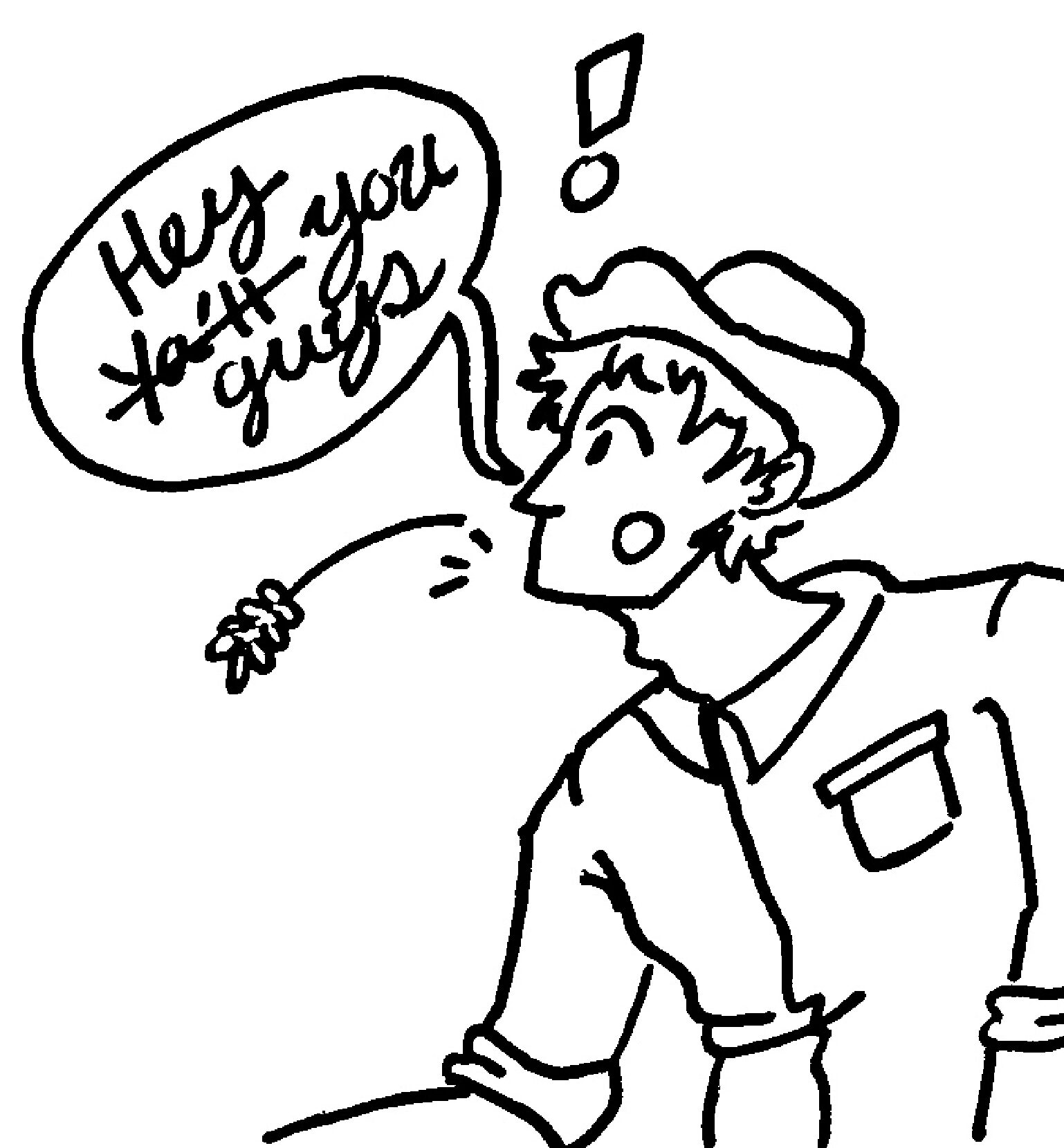
Their jaw literally dropped. It was orientation week, and I thought we were just doing the usual “Where are you from?” small talk. But then they dropped something along the lines of “I didn’t know Alabama had people like you.”
People like me. I sat there wondering what they thought they’d learned about me in three minutes of talking, and why on Earth any of it felt completely impossible for where I grew up. Whatever they meant by it, I suddenly found myself in a weird spot where I had to explain how my hometown and I could even exist in the same sentence.
I’ve mostly lost my Southern accent over time, so people don’t always hear Alabama when I speak. Sometimes I wonder what unfair assumptions that’s saved me from. But whenever I do say where I’m from, it still creates a strange gap I’m expected to bridge between the person standing right in front of me and whatever stereotype they’ve built in their head about the place I call home.
It’s a bizarre feeling when someone treats you like you’re the exception to your own roots. When you accept that kind of compliment, you’re basically letting their underlying assumption go unchallenged, which is the idea that whatever they like about you couldn’t possibly belong back home.
At the College of William and Mary, where we’re constantly told to question everything, I really wish telling people I’m from Alabama sparked actual curiosity instead of total disbelief.
During class one day, a student brought up this idea that people in small Southern towns get all their information from local newspapers or news stations, sources they basically tossed off as always being wrong. I pushed back on that blanket assumption, but what really stuck with me was the picture it painted of Southern life. It implied people down there are stuck in a narrow little world, totally lacking the curiosity or ability to think beyond it.
It’s worth asking how our surroundings shape what we believe. But answering that takes real curiosity, not lazy generalizations. Which exact communities are we talking about? Whose actual lives count in that story? How much do we really know about the people whose limits we feel so qualified to judge?
There’s definitely a comfort in placing ignorance somewhere far away from ourselves. If we can explain away someone else’s beliefs just by looking at their zip code, we don’t have to bother examining their actual reasoning, or our own for that matter.
An accent just makes that lazy judgment even easier. As soon as someone opens their mouth, the listener starts filling in the blanks regarding their education, class, politics and overall intelligence. The speaker barely gets a full sentence out, and the listener thinks they’ve already got them totally figured out.
Losing most of my accent didn’t make me any smarter, and it definitely didn’t make my relationship with Alabama any simpler. But it does make me wonder how differently my exact same words would be heard if I spoke in a voice that sounded unmistakably Southern. Why should an argument suddenly sound more legitimate just because the accent of home fades out of it?
Politics is a huge part of this, too. A 2020 study in Social Science Quarterly showed that people from both major political parties were much more likely to label hypothetical political candidates with Southern accents as Republicans, even when those candidates were explicitly pushing Democratic policies. Listeners jumped straight to a political conclusion regardless of what was actually being said.
We should be able to challenge someone’s politics without treating their birthplace as the sole explanation for everything they believe. Challenge their evidence. Question their logic. Honest disagreement loses its value the moment we assume someone holds a belief just because nobody in their hometown was smart enough to teach them better.
Honestly, there’s a real class bias hiding underneath these judgments. When we say someone “sounds educated,” what are we actually saying? Are we reacting to the quality of their thinking, or are we just recognizing the speech patterns of people we already associate with authority? When the way people speak in rural or working-class communities is treated as something you have to overcome, knowing how to talk like an academic suddenly gets mistaken for actual intelligence. Some students get the benefit of the doubt automatically, while others have to prove they even belong in the room before anyone takes their ideas seriously.
Growing up in Alabama, the internet opened up a world of perspectives far beyond my immediate surroundings. It gave me access to conversations, communities and possibilities I might not otherwise have encountered. Those connections challenged my assumptions and expanded my sense of what my future could hold.
But needing that connection doesn’t make Alabama some kind of intellectual wasteland. My feelings about home are a mix of deep affection and genuine frustration. I can acknowledge what made growing up there tough without accepting descriptions that erase everything else about the place.
I shouldn’t have to choose between defending every single thing about Alabama or proving that I’m some rare exception to it.
Forcing that choice also makes real criticism way less effective. Issues like racism, homophobia and exclusion need to be confronted directly. But painting the entire South as backward erases the huge differences between the people holding power, the people harmed by it and the people actively working to change things. Queer southerners and Black southerners aren’t outsiders. They are the South. Their lived experiences can’t just be an afterthought when we talk about the region.
In fact, a 2023 report from the Williams Institute at UCLA School of Law found that about 35.9% of LGBT adults in the U.S. (roughly 5 million people) live in the South, which is more than any other region in the country. When we pretend that being Southern and being queer can’t exist together, we’re literally erasing millions of people from their own homes. We end up handing the mic to the very people trying to exclude them, letting them define what it means to be Southern.
I know what it’s like to look for connections beyond where you grew up. But looking beyond home shouldn’t mean giving up the right to claim it. My love for Alabama has never meant turning a blind eye to its flaws, and leaving hasn’t magically untangled everything I feel about it. I think a lot of people, no matter where they’re from, get that exact mix of love and frustration. We should be able to recognize that complexity in each other.
When I tell someone I’m from Alabama, I’m giving them a starting point to get to know me. I just wish they’d stay curious long enough to listen to the next sentence.
