

Alexandra Hill ’28 is a prospective English major and creative writing minor. She does research at the IIC Conservation GIS lab and is a member of Vox. When she’s not submitting her columns late, you can find her yapping, daydreaming or dancing really badly. Contact her at abhill@wm.edu.
The views expressed in the article are the author’s own.
This summer, I went to a farm upstate — no, seriously. A real farm upstate.
I’ll admit, even I was surprised about my decision to work there. Most of what I know about farming comes from a combination of the Old MacDonald song and cottagecore social media content. But before I knew it, I was in the car on my way to New York, passing cow crossing signs and the like.
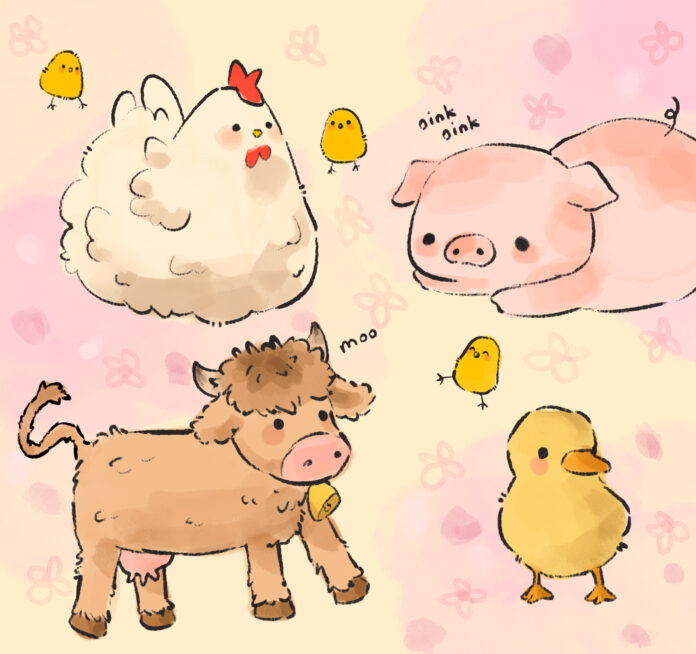
As you might imagine, I was a little out of my depth when it came to mucking the barn (more formally, scraping 70 cows’ doo-doo off the floor), feeding the pigs leftover dairy products (just like gym bros, they eat whey) and walking the sheep (they were very baadly behaved).
For context, my primary role on the farm was being a camp counselor and leading groups of kids through farm life. I do not pretend to be an authority on farming. I did not like many aspects of the job. The hours were exhausting and classroom management is far from my strong suit. By the end of the summer, I was so sick from burnout I thought I had Lyme disease.
Despite all of this, I felt that I was exactly where I needed to be. I found myself enjoying carrying buckets of water, feeding the chickens and cleaning the horse stalls. In these simple, concrete acts, I felt a quiet presence. The work was where my hands met the soil, not a keyboard. Instead of existing in the cyberspace of homework assignments, I existed where my feet were.
When I spend too much time at a desk or on a device, I start to feel adrift. I get an eerie sensation of existing more in the digital world than the physical one. I become disconnected from my body and my sense of being a living, breathing animal. My days can feel like a treadmill of busywork, and a sense of impact is fleeting if at all existent.
One of the grounding aspects of the farm was how tangible the effects of my actions were. When I fed the sheep, they bleated and jumped up on the fence to beg for a molasses treat. When I collected chicken eggs in the morning, I knew they would be on the breakfast menu. When I mucked the barn, I was rewarded with the satisfaction of exhausted muscles. I was a small but significant part of the rhythms of farm life.
As I worked, my sense of isolation from the environment fell away. I stewarded the land my food came from. I cared for the animals that nourished the local community. I composted my table scraps and let them return to the soil. I remembered my deep connection to this world as an animal in its vast ecosystem.
I know I speak from a position of extraordinary privilege here — including the privilege of receiving a college education in a society that values its “intellectual” labor much more than its physical labor. I still am immensely grateful for my chance to receive an education here, and I continue to enjoy the classroom environment.
At the same time, I underestimated the value of learning what a pig pen smells like. In other words, I underestimated the school of embodied experience.
I have always been good at academics. I have always accepted that I will work a traditional desk job. I have always had a very hard time thinking outside of my box.
I am beyond grateful for the opportunity to live outside of it.
Back on campus, my routine looks pretty much the same. I haven’t turned the space under my twin XL bed into a greenhouse or smuggled a pet sheep into my dorm room (though I won’t pretend I haven’t thought about it). Yet, my life here has shifted ever so slightly.
I now have the quiet reminder that I am a physical being, that I am part of this earth.
