
Last semester, students at the College of William and Mary approved referendums calling on the school to end its relationship with artificial intelligence-powered surveillance companies Flock and ZeroEyes.
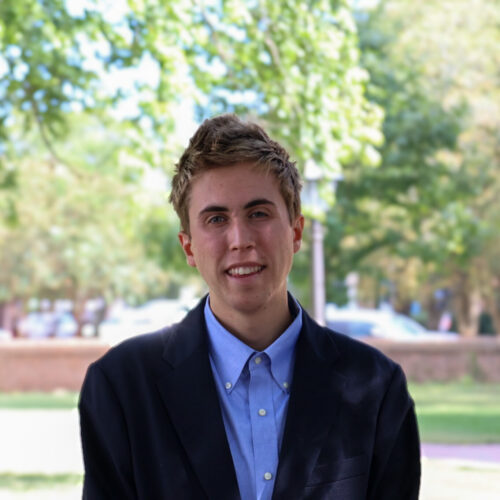
Student Assembly Vice President Sophie Kennedy ’27 said she has met with College administrators to address these concerns.
“In the conversation of privacy versus security, I’m someone who, on a college campus, tends to lean more towards the privacy side and agreeing with some of the students,” she said. “I also have really tried to educate myself on Flock and ZeroEyes because it’s a concern that I personally hold.”
Kennedy acknowledged that she and other students may disagree with College administrators on this issue. But she said she believes they operate in good faith.
“Even though I walk away still feeling like we disagree, I always feel like it’s a productive conversation and we’re trying to get something out of it,” she said.
Kennedy said the moderated public safety conversation with the Office of Public Safety was an effective way to communicate student concerns before the end of the semester. She expressed a willingness to continue scheduling events about public safety and AI-powered surveillance initiatives based on students’ requests.
“If we have more time, we can plan something even better because I know that there’s always feedback and always room for improvement,” she said. “We’ll see what students want next semester.”
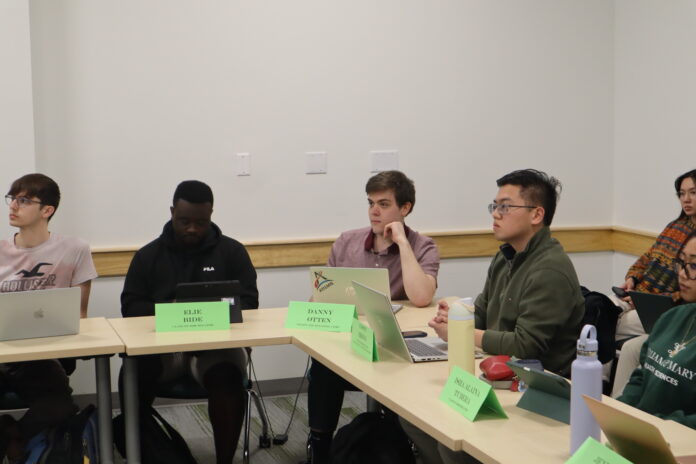
Sen. Danny Otten ’23 Ph.D. ’27 said he learned about ZeroEyes from a friend who obtained the College’s agreement with the company through a public records request. He quickly became concerned with potential privacy and security vulnerabilities.
Otten sponsored a ZeroEyes referendum bill, which passed the SA Senate following an hours-long debate. Students voted on the referendum after the spring SA elections and overwhelmingly called on the College to cancel its ZeroEyes agreement.
Otten said he is worried about ZeroEyes recording personally identifiable information, specifically the faces of students and community members. The company can do this when the software detects a potential weapon and ZeroEyes captures the security camera footage of the possible threat.
“It’s essentially just giving away a ton of information about the school and our community for nothing in return,” he said.
Otten said he does not see AI-integrated security systems as inherently bad. He acknowledged how they could be used for safety.
The College argues its use of AI-powered surveillance systems has improved community safety. During the moderated public safety conversation, William and Mary Police Department Chief Don Butler said the College solved two crimes using Flock technology.
Regardless, Otten said he believes ZeroEyes is especially poor at safeguarding student privacy and stopping threats.
“The way ZeroEyes specifically bills itself and works makes it more or less guaranteed, as far as I can tell, that it’s not going to do anything,” he said.
With the required signatures to present the issue on the spring election ballot, Otten said he hoped to dissuade senators who wanted to amend or delay his ZeroEyes referendum bill. Thus, during the meeting before the vote, he threatened to submit the referendum irrespective of whether the senate voted down or delayed his bill.
He also said he would communicate SA members’ votes to the hundreds of students who signed his petition.
“I think there may have been a bit of an overreaction because technically, all those votes are public if you look at the Student Assembly [Google] Drive,” he said.
Class of 2029 President Daria Lesmerises ’29 and Sen. Mayer Tawfik ’27 accused Otten of blackmailing them into supporting his bill. Other members also expressed discomfort with Otten’s threats and refused to lend support to his measure unless he backtracked.
Otten eventually retracted his threats during the meeting and later apologized.
“I may have failed to recognize that I had a lot more knowledge and investment than the other senators did, so talking about releasing all their votes to students may not have played well with them,” he said.
Lesmerises clarified the comments she directed toward Otten during that meeting. She said she supports the content of the ZeroEyes referendum bill and shares student concerns about AI-powered surveillance on campus.
“I do not believe ZeroEyes or Flock have a place on William and Mary’s campus and I share the same concerns that Danny (and the majority of the campus) have on these issues,” Lesmerises wrote in an email.
She said her main issue with Otten’s strategy was that his original bill would have afforded students only a few days — and senators very limited time — to learn about the issue before voting.
Lesmerises said she was concerned that Otten’s message to students could have lacked important context. She said she and other representatives mostly agreed with the bill’s content but only wanted to delay it briefly to allow students and SA members more time to educate themselves about the issue.
Tawfik said in an emailed statement that he agreed with Otten’s advocacy efforts but that he still believes Otten’s actions amounted to blackmail. He added that Otten’s threats during the meeting were a “bad faith” and “dubious” weaponization of senators’ voting records.
“I welcome transparency and the publication of voting records, but I do not welcome attempts to manipulate our institutional safeguards towards a rushed and improperly conducted referendum,” he wrote.
Tawfik also said Otten misrepresented opposing arguments and excluded key information in his communications.
Kennedy acknowledged the existence of internal SA disagreement. However, she said she views SA as more united than divided on addressing student privacy and AI-powered campus surveillance.
“I think that when we’re talking about the broad scheme of things, we do all have the same goal,” she said. “It’s just about reminding ourselves of what’s in the best interest of students.”