

Carson Burch ’27 is a government major from Chesapeake, Virginia. He is a member of the History Club, Public Policy Club, Lutheran Students’ Association and Theodore Roosevelt Society. Outside of his studies and social life, he enjoys reading about historical and current events in addition to dinosaurs.
The views expressed in the article are the author’s own.
Every now and again, I find myself scrolling through websites like Reddit. And in the process, I expose myself to the common discourse surrounding the important issues of our time. While some opinions are reasonable, even if I personally disagree with them, other takes baffle me. Since I have also heard them from other people offline —both people with political/media followings and people in the streets — I think it is worth examining why they are wrong, why people spread them and why the abrogation of civic responsibility this encourages is dangerous for democracy.
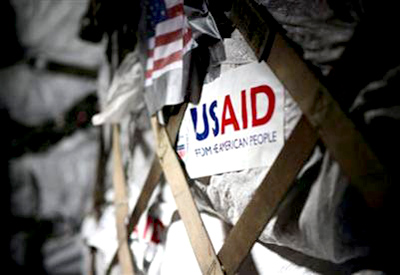
A particularly pernicious and common trend is blaming foreign aid for bankrupting the United States. This is a common narrative the populist right spreads to justify the Trump administration’s destruction of the U.S. Agency for International Development and contempt for supporting our overseas allies, but it has appeal in populist spaces more generally. This is not true: The 2024 foreign aid budget (the version implemented before the demolition of our main aid agency) ultimately came out to $86 billion, which sounds like a lot until you realize that federal spending that year amounted to $6.8 trillion and left behind a deficit of nearly $2 trillion. The actual biggest drivers of spending are those associated with supporting our own citizens, namely Social Security and Medicare, and we will not get our fiscal house in order until we realize this.
But acknowledging that would mean admitting that the policy decisions required to avert a coming fiscal catastrophe would be ones that Americans would have to actually make sacrifices to implement. Since that is a difficult realization while blaming foreigners is easy, that is what politicians and media influencers do. Both big-name figures and anonymous accounts then spread these falsehoods to hordes of upvotes from people looking to be lied to.
Why do these narratives matter? For starters, if you couldn’t tell by my commentary, I think that these false narratives prevent citizens from engaging with difficult or inconvenient facts that we don’t want to acknowledge. I’ve written about the problems of Americans failing to take responsibility for their political behavior and engaging in organized reality denial, and the trend of falsely attributing major social problems to the wrong sources is a pernicious combination of these two trends. It both prevents us from acknowledging the ways in which we might be complicit in our own national nightmare while also leading us to accuse it of other people who might not even deserve it.
Because of our inability to properly analyze societal problems, we will continue to elect demagogic leaders who promise us that everything we want can be done easily with no consequences for ourselves. For instance, with regards to foreign aid, our leaders can tell us that they can easily pay for universal healthcare or further tax cuts by simply spending less on aid programs that don’t materially benefit American citizens. Because the public believes this to be true, it will lap up these claims without thinking critically and elect these leaders gleefully.
When it becomes apparent that these claims were lies promoted by con-men for their own self-aggrandizement, we will have already missed substantial chances for meaningful change as we wasted time and effort on populist pandering rather than problem solving (in this case, reforms to entitlements to reduce expenditure and/or increase the taxes that fund these programs). This might actually be the optimistic scenario, as it assumes the American body politic desires change; more likely than not, a new scapegoat will be identified and a new class of politicians (or possibly even the exact same people) will rise to power, promising an easy solution to deal with that.
Therefore, if we want to actually advance as a society and solve the very real problems we are faced with, we should begin accepting responsibility for our mistakes and acknowledge the complexity of the world while searching for solutions, rather than merely blaming entities which do not deserve it. This sort of introspection will doubtlessly receive few upvotes online, but it is critical to maintaining a functional democracy as effective self-governance requires exactly this kind of responsibility.
